
Search results for: “label/Web%20Site%20-%20Design”

  • 5 Reasons Why Moving to Cloud Facilitating is an Extraordinary Thought for Private Companies

    5 Reasons Why Moving to Cloud Facilitating is an Extraordinary Thought for Private Companies

    Inheritance facilitating situations have been trusted by little and also medium organizations since their beginning. These conditions have given stable help throughout the years and furthermore picked up the trust of the SMB people group after some time.

    In any case, the appearance of cloud innovation has earned a positive reaction from the business network. Additionally, the effect of cloud innovation on facilitating conditions has settled on it a favoured decision as a web facilitating answer for businesses. This is to a great extent a result of the versatile and adaptable nature of cloud facilitating itself.

    The advantages given by the best cloud hosting has made it a priority for a chief to comprehend what makes cloud facilitating so convincing and why moving to the equivalent would bode well.

    As we test further, we saw in excess of a reason or two for doing likewise. How about we bounce in and know more, will we?

    1. Scaling increased

    Cloud hosting gives its deployers the benefit of widespread scaling. The reason individuals pick cloud facilitating, in any case, is on the grounds that it can take care of the demand of assets in the blink of an eye.

    IIn this way, regardless of whether its deployers need to scale up or downsize, cloud hosting enables clients to do either, at a quick pace. In addition, there is no limitation concerning inclining the pace of cloud utilization since cloud server farms are available around the world.

    Likewise, in the event that you have the best cloud hosting supplier who comprehends your requirements, you can have numerous records without agonizing over web activity.

    2. Efficient in nature

    Relocating to cloud lessens the heap on capex and opex. Any business that needs to moderate its IT expenses ought to in a perfect world move to the best cloud hosting. Rather than being a cost place for the association, organizations should make the most out of this by picking a decent cloud hosting supplier that gives them a month to month or a yearly arrangement.

    This will take away the issue that organizations by and large experience when they buy permitting models. With cloud facilitating, one pays for the assets used and nothing far beyond.

    3. Incredible capacity limit

    Cloud hosting fills in as a pool for a huge measure of computerized information to be put away over numerous servers and in additional areas. This rearranges the need to store terabytes as well as petabytes of information.

    Since capacity is getting less expensive as an asset step by step, cloud facilitating suppliers are likewise expanding the storage room given in their plans.

    With this, the inclination for the best cloud hosting as an administration has developed. Furthermore, cloud facilitating agrees to a wide range of information for capacity, thanks to its reliability and security features, as opposed to confining to the sort of information like other web facilitating administrations.

    This is one of the real reasons why organizations are relocating to the best cloud hosting.

    4. Adaptable condition

    Conveying applications in cloud facilitating situations has turned out to be less demanding at this point. With time, an ever-increasing number of associations are relocating from inheritance conditions to mixture cloud situations to send the top of the line applications and products.

    This has made organizations turn to cloud facilitating in an offer to help their cloud capacities. Also, any organizations can recuperate lost information with reinforcement arrangements like CodeGuard if there should be an occurrence of malware or digital assaults.

    Since cloud hosting gives clients the opportunity to plan, arrange and assemble applications alongside a sound reinforcement, organizations can undoubtedly move inside open, private and mixture cloud situations.

    This adaptability is immense in addition to any business, which makes picking a decent arrangement supplier from a large group of cloud facilitating suppliers a critical errand.

    5. Awesome versatility and convenience

    One of the real difficulties of facilitating on inheritance based conditions is the way that relocation requires some serious energy and furthermore is somewhat unsafe. There is a consistent danger of information getting spilled because of relocation.

    Cloud facilitating has enabled organizations to effectively exchange information from one facilitating condition to the next. It’s not as though you will exchange facilitating information consistently, however when you will, consider cloud facilitating as an answer since it will facilitate the change for you.

    What’s more, workers can get to any sort of information including information documents on cloud facilitating or even transfer records on the server from wherever and whenever. Since cloud hosting has pretty much conquered the difficulties of versatility and compactness, organizations are confiding in its administration and making the most out of it.

    Finally

    With the sort of points of interest given by cloud facilitating, it would just be reasonable to say that any organizations searching for a web facilitating administrations ought to consider cloud facilitating as a genuine alternative. In addition, the enhancements made in the cloud innovation directly affect cloud facilitating generally.

    Finally, we trust that you will consider these advantages important going ahead while picking a decent facilitating supplier among many cloud facilitating suppliers. Since a facilitating administration that can open the capability of your business isn’t just an administration yet additionally a benefit making instrument.
  • Broadband Internet Connection – Troubleshooting

    Many times as I connect to the Internet I realize that I don’t establish a connection. My modem and router (Linksys BEFSX41) are on and connected, but still I can’t reach the Internet. The purpose of this post is to discuss the steps I take to bringing my modem, router and computer back online.

    Note: This post assumes that you know how to log into your router and know where specific settings, such as the IP addresses are displayed.

    Reset the Equipment

    Before changing the settings, you should first reset all equipment as the first step. The following steps describe the order to reset the equipment:

    1. Turn off the computer.
    2. Turn off or unplug the router.
    3. Turn off or unplug the modem.
    4. Wait 5 seconds.
    5. Plug in the modem and wait for it to come back online.
    6. Plug in the router and wait for it to come back online.
    7. Turn on the computer and login.
    8. Click Start->Run.
    9. Type cmd in the Run dialog box and press OK.
    10. At the DOS command prompt type ipconfig /renew.
    11. Check to see if you once again have a connection to the Internet. If you can’t get an Internet connection then continue on to the next section.

    Checking Router Connectivity

    In this section we will check to ensure that the router has an IP address from your Internet Service Provider (ISP).

    1. Open up a Web browser and navigate to your router setup.
    2. Once the setup loads, navigate to the page that displays the IP address assigned by your ISP. For my Linksys router is shown by clicking the Status menu item.
    3. There may be buttons or links to release and renew the IP address. First, release the address, and then renew it. For my Linksys router, I first click the DHCP Release button and then the DHCP Renew button.
    4. An Internet or IP address should now be displayed in the page. If it doesn’t, then check to ensure that the router is connected to the modem and perform the previous step again. If you still don’t get an IP address then skip the next steps and continue directly with the next section.
    5. Click Start->Run.
    6. Type cmd in the Run dialog box and press OK.
    7. At the DOS command prompt type ipconfig /renew.
    8. Check to see if you once again have a connection to the Internet. If you can’t get an Internet connection then continue on to the next section.

    Computer to Modem Connection

    This section will determine if you can actually get an IP address from your modem, which would mean that there is a problem with the router. Follow the next few steps to perform the connection:

    1. Disconnect the cable connecting the router and the computer from the computer.
    2. Disconnect the cable connecting the modem and the router from the router.
    3. Connect the cable from the modem directly into the network card in your computer. Plug the cable into the same location as the router was connected into.
    4. Click Start->Run.
    5. Type cmd in the Run dialog box and press OK.
    6. At the DOS command prompt type ipconfig /renew.
    7. Check to see if you once again have a connection to the Internet. If you don’t then call your ISP technical support number and inform them of a problem. If you do, then there may be an issue with your router. Continue to the next section to see if the router problem can be fixed.
    8. Before continuing, however, ensure that you plug in all the cables as previous to following the steps in the section. This means that the connection should be: modem->router->computer.

    Troubleshooting the Router

    Up to this point we have reset all the equipment, tested the router, and the modem. It has been determined that the problem may be with the router. This section will attempt to solve the issue.

    1. If you closed the Web browser from a previous section then open a Web browser and navigate to your router’s setup.
    2. Navigate to the page containing your Internet Setup. For my router it is the first page that is displayed.
    3. Your setup hear depends on your ISP. Since I have cable as my Internet connection I make sure that setup is set to Obtain an IP automatically. If you have broadband dialup, you may need to select PPPoE and specify a user name an password. Check with the documentation provided by your ISP to determine which setting you should use.
    4. Ensure that DHCP on the router is enabled.
    5. Ensure that the number of IP addresses managed by the router can accommodate the number of computers that will be connected to it.
    6. Save any setting changes you made.
    7. Click Start->Run.
    8. Type cmd in the Run dialog box and press OK.
    9. At the DOS command prompt type ipconfig /renew.
    10. Check to see if you once again have a connection to the Internet. If you can’t, then continue to the next step.
    11. At this point you should try resetting the router to factory defaults and try the previous four steps again. Please read the documentation that came with your router on resetting it.
    12. If it still doesn’t work then there could be a hardware issue with the router. If you just bought it, return it to the store and get a new replacement. If it is an older router, you may need to buy a new one.

    Summary

    This post described how to troubleshoot a broadband Internet connection. I hope that the tips provided here have help to solve connection issues that you may be having.

  • What is a Device Driver?

    You have probably connected several devices to your computer, a printer, scanner, or digital camera, and sometimes Windows would recognize the device without difficulty. Other times, however, the device was now recognized by Windows, and you couldn’t use the device.

    The reason Windows couldn’t recognize the device was because it didn’t have a device driver for it. This is required by all devices that are connected to your computer, both internal and external. In this post, I will describe what a device driver is, as well as what it does.

    Interacting with Hardware

    There are many types of hardware that you can connect to your computer. Hardware such as video or sound cards are connected directly to the motherboard inside of your case, while printers and scanners are connected externally into one of the ports. The problem is how does an operating system know how to talk to the hardware if it is all different. Answer: through the use of device drivers.

    A device driver, or just driver, is a computer program that allows software interact with hardware. Typically, the software that talks to the device driver is the operating system, such as Windows. Essentially, the driver is an instruction manual that provides information to the operating system on how to communicate and use the device.

    Installing Device Drivers

    If the operating system needs to use a driver to talk to a device, how is the driver installed? There are many ways a driver is installed.

    If the device you are connecting is older than the version of Windows, chances are that Windows already contains the necessary driver. Once you connect your device, then Windows will detect it and install the drivers automatically. You may be prompted to insert the Windows CD/DVD.

    Most devices also include a CD that includes such things as applications and manuals. Also on the CD are drivers for specific operating systems that you can install. These drivers should be installed if the operating system is older than the device. Since the device wasn’t around when the operating system was created, then it obviously wouldn’t have the drivers. Follow the instructions included with your device to install the drivers.

    You can also navigate to the vendor’s Web site of your device online and download any updated drivers. Once downloaded you just run the application and the drivers are installed.

    It is important to keep your device drivers updated as they may help fix any issues you may be having. Sometimes Windows Update will install an updated driver. You can also go to the vendor’s Web site and see if they have a new driver available for download.

    Summary

    Device drivers are used by the operating system to communicate with a piece of hardware. Anytime you install a new piece of hardware, you will also need to install the device driver associated with that hardware.

    There are many ways of installing the driver. The operating system can install the driver if it has one, install the driver from the CD that came with the device, or download the driver from the vendor’s Web site.

  • Overview of Various Image File Formats

    There are many different image file formats in use on Web pages today. Each file format has its advantages and disadvantages, and can be used for specific images. For those that use digital cameras you may be familiar with one format, while you may have heard of others.

    In this post I will provide an overview of the different formats including their advantages and disadvantages.

    (more…)

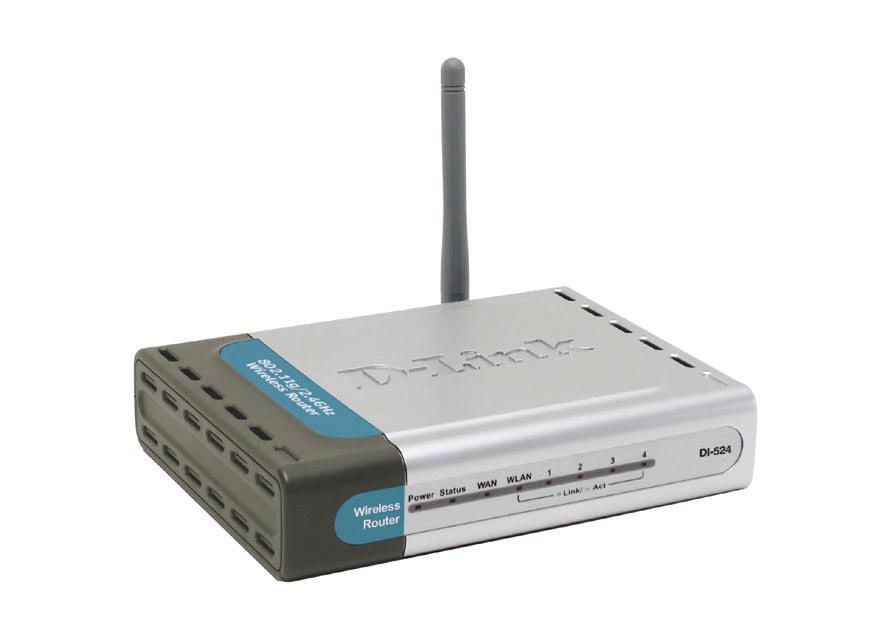
  • Securing the D-link DI-524 Wireless Router

    Securing the D-link DI-524 Wireless Router

    I recently created a post titled Securing Linksys WRT54G Wireless-G router in which I provided step-by-step instructions on securing the WRT54G router. The Linksys WRT54G Wireless-G router is a popular router, but it isn’t the only one on the market. In this post I will discuss how to secure another wireless router, the D-Link DI-524.

    Note:

    If you are having trouble with the administrative pages for the router, try using the Internet Explorer Web browser. The administrative Web pages for the router seem to work better in Internet Explorer.

    Securing Your Wireless Router

    Note:

    If you need to reset your router back to the factory defaults, then please read How to Reset the D-Link DI-524 Wireless Router.

    To secure your D-Link DI-524 wireless router, follow these steps:

    1. Open your Internet browser and enter the following in the address bar: http://192.168.0.1.
    2. Note:

      If you have changed the IP address of your wireless router, enter that into the address bar. By default, the address is 192.168.0.1.

    3. Enter the user ID and password for your router. If you haven’t changed it, the default user ID is “admin” and the password is “blank”. We will change it later if you haven’t already changed it.
    4. We will first change the administrative password. First click the “Tools” tab at the top of the page. The “Admin” page should be displayed.
    5. Within the “Administrator Settings” on the right, enter a new password for the administrator beside “New Password” and then again beside “Confirm Password”.
    6. Click “Apply” at the bottom of the page. The next time you access the administrative options, you will need to enter the new password with the “admin” user ID.
    7. Next, click the “Home” tab, and then select “DHCP” on the right. The “DHCP Server” Web page should now be displayed.
    8. We will now limit the number of IP addresses assigned by your wireless router. Count the number of computers that will connect to the router, and change the “Ending IP Address” to allow that many computers to connect.
    9. For example, if you have three computers that need to connect to your wireless router, enter “102” into the text box. The first computer will get the IP address 192.168.0.100, the second 192.168.101 and the third 192.168.0.102.

    10. Click “Apply” at the bottom to save your changes.
    11. Now we will secure you wireless connection to prevent others from connecting. Under the “Home” tab, click the “Wireless” option from the left.
    12. Beside the “SSID” option, enter the name for your wireless network connection.
    13. This is where the steps are different depending on which revision of the DI-524 you are using. Beside “Security”, if you see “WPA-PSK”, then you should select that option, and then go to step 14. If you see a dropdown list, select “WPA”. If you can’t connect using “WPA”, then select “WEP”. Using “WPA” will provide a much more secure connection that using “WEP”. For more information about WEP and WPA please read Wireless Security: WEP and WPA.
    14. Click “AES” beside the “Cypher Type”.
    15. Make sure “PSK” is selected beside “PSK/EAP”.
    16. Now you must get very creative. Specify a long “Passphrase” with a mix of upper and lower case letters, numbers and punctuation. Once again, please read Creating Secure Passwords for tips on how to do this. In this case the longer the better.
    17. Make sure you write down this key somewhere, either on a piece of paper or in a text document on your computer. You will need this information when you connect to your wireless network.

    18. Enter your passphrase next to “Passphrase” and again beside Confirmed Passphrase.
    19. Click Apply to save your security settings.
    20. Now you are all done securing your wireless router and network. All you need to do is connect to your network, and enter your “Passphrase” exactly as you specified it. I won’t go into detail on how to connect to your wireless network, as I will save that for another post.

    Wireless Router Security Connection Questions

    How come we didn’t disable the SSID broadcast? Won’t that help with securing my wireless connection?
    It has been mentioned many times that disabling your SSID broadcast will help secure your network. The reality is that those who attempt to get into your wireless network will be able to easily pick up or SSID whether it is broadcasted or not. You may also have problems connecting to your wireless router if you disable the broadcasting of your SSID. I keep it enabled.
    Question: Why do you specify to use WPA – Personal first, and not WEP?
    The reason is that WPA is much more secure than WEP, and therefore you should use that security mode over WEP. An experienced hacker can easily crack WEP encryption so it doesn’t provide as strong security as WPA. If you can’t use WPA, use WEP because it is still better than nothing.

    Summary

    This post provided step-by-step instructions on securing your D-Link DI-524 wireless router. After following the steps, you should now be confident knowing that you have a secure wireless Internet connection.

  • E-mail Frauds and Scams

    For many years now security experts have been warning others about fraudulent e-mails and scams. Even after the warnings, there are still people who are taken in by these frauds and scam artists. The cost to those who are taken in can be hundreds of thousands of dollars or even their entire identity.

    In this post I will discuss the types of scams and frauds that are mostly used in e-mails and ways to avoid them.

    Phishing

    In the past you may have received e-mails from a trustworthy institution asking to confirm some details about yourself. These details can include everything from a user ID, password to your account or PIN number. These e-mails are sent by scammers looking to steal important information from you. This is known as phishing.

    Phishing has been around for many years, but has now entered the security spotlight as more users get caught in the scams.

    Usually someone will receive an e-mail from a reputable company asking the user to confirm some important information about themselves. The e-mail usually contains a link that directs the user to a form on a Web page. The Web page is designed to look exactly like the company that they are pretending to be. The form, however, is located on a server the scammer uses and can control.

    Once the user fills in the information on the form and submits it, the scammer can then use that information as they please. This is a major cause of identity theft as the scammer can now assume the identity of the user.

    Prevention

    There are many ways to prevent losing important information to a scammer. The most important method is common sense. I don’t know of any financial institution, or any company for that matter, that will ask for personal information through e-mail. If you receive an e-mail such as this, and are unsure, then call up the company and let them know. Many times they will then take action to stop those who are sending the e-mails.

    A clue to determining if an e-mail is legit is to look at the spelling and grammar. Many times the spelling and grammar will be extremely poor, which indicates that a company did not send out the e-mail.

    Many of the newer browsers, such as Internet Explorer 7, Firefox 2.0, and Opera all have built-in anti-phishing measures. These browsers will notify you if you access a Web page that has been flagged as a phishing site. If you haven’t already, I suggest you upgrade to one of these browsers.

    Advanced Fee Fraud

    Have you ever received an e-mail from someone who says they are an official with millions of dollars? You are then to contact them as you are the beneficiary of this so called money? If you have then you know about the scam known as Advanced Fee Fraud also known as the 419 fraud.

    These frauds are different than phishing in that they try to get your money and not your information. It is called the 419 fraud after the section of the Nigerian penal code which addresses fraud schemes. Many of these scams deal with traveling to Nigeria, mailing something to Nigeria, or meeting with a Nigerian official.

    Many of the e-mails tied to the 419 fraud usually involve some sort of urgency such as a health matter. An individual representing someone else with a vast fortune will contact you stating that you are the beneficiary of the fortune. In the e-mail, you will be instructed on transferring money to the unknown individual for fees and other costs of transferring the millions to you. This is how many of the scammers make their money.

    Prevention

    Since this scam occurs through e-mail, the biggest method of preventing it is to use your common sense and just delete the e-mail. Most of the time you can spot these e-mails by the extremely poor spelling and grammar. Sometimes the spelling is so bad it becomes comical.

    If you want some enjoyment of seeing these 419 fraud scammers getting what they deserver, check out: 419 Eater. What the author of that site does to the scammers is very amusing.

    Summary

    In this post I have talked about two of the popular methods that scammers use to steal your identity or money. It is important to understand that the best method of protecting yourself is to simply use common sense. I you don’t recognize the sender of the e-mail, just delete it.

  • Review: Matts Nutts Blog

    There is much information on various Web sites devoted to SEO, WordPress or blogging in general. Many simply display the same information that is provided on other sites, while others provide the information in a badly designed Web site.

    This week I look at Matts Nutts which is focused on SEO, WordPress and blogging. The blog provides original posts with a nice clean design that will help others succeed in the world of blogging.

    Matts Nutts Blog

    Design 4.5 stars

    When I first looked at Matts Nutts I was immediately impressed with the look of the blog. I found it very easy on the eyes with a nice selection of colours. All colours on the blog seem to fit together nicely with none of the colours feeling out of place. I thought even the search bar with an completely different colour than the rest of the blog was a nice touch. It made the search bar stand out with is a nice plus if you would like to find specific information.

    I like the fact that the header wasn’t too big and allowed at least one full post to appear above the fold. Many web sites have such a large header that a visitor would need to scroll down to find any of the content. The author has created a good size header to prevent any scrolling for content.

    I like how the author shows only a few paragraphs of each post on the main page and then a link to the full post. This allowed me to quickly scan through the posts and click on any that I was interested in reading.

    There really wasn’t any downsides to the design of the blog. I didn’t, however, like how the “Categories” section in the navigation bar was to the far right, and on my display, below the fold. I always like the categories to be more accessible as I can then easily view posts for a particular category.

    One other issue I found with the design was on the “Contact Us” page. I found the headings in the form to be a little hard to read. The text is too small and light for the background colour. Besides these two design issues, the design of the entire blog was really well done.

    Focus 4.5 stars

    The focus of the blog is mainly on SEO, WordPress and blogging in general. When reading the posts you can easily determine the main focus of the blog.

    I noticed that WordPress is covered in more detail than the other two focus points of the blog. The author definitely has much experience with using WordPress and provides great information on using it to create better blogs.

    As for SEO, there are several posts relating to this topic, albeit, not as many as WordPress. The author provides some useful tips to optimizing your blog for search engines, especially if you use WordPress.

    As for blogging in general, the author provides information on how to mnage blogs and tools that you can use. Many of his WordPress posts can also be used for other blogging engines, so don’t shy away from the blog just because you don’t use WordPress.

    The focus of Matts Nutts is well defined and narrowed down to specific topics. Simply reading the blog without knowing the main focus will allow you to determine the focus yourself.

    Content 4 stars

    The content of Matts Nutts is well focussed. The posts are detailed and provide information on the various tools and tips on creating and maintaing a blog. Although blogging in general is discussed at times, the main target audience are those bloggers that use WordPress.

    The author publishes posts to the blog on a regular basis, which is a good indication of how much time and effort the author puts into the blog. Subscibers to the blog will be rewarded with at least 3 posts a week.

    Unfortunately, at times the spelling and grammar mistakes can take away from the readability of the posts. If there were less mistakes, then the content would be top notch. These mistakes are discussed in the next section.

    Spelling and Grammar 2.5 stars

    The one downside to this blog is the spelling and grammar. There are various grammar mistakes that may cause visitors to re-read a sentence a second time to understand the point the author is trying to make.

    Many of the spelling mistakes are simple mistakes such as forgetting punctuation or the space between words. A simple text editor that includes a spell checker can easily identify the spelling mistakes within the posts. Most of the mistakes, however, don’t make the posts unreadable as they are usually just simple ones that you can easily identify the word the author intended to use.

    The one mistake that appears throughout the blog is that of not capitalizing names. There are several posts that list the names of companies or products and the names are all in lower case. Once again, however, a visitor can easily understand the name of the company or product since the spelling is correct.

    Overall 3.5 stars

    The look of Matts Nutts is very easy to read and navigate around. The colours are easy on the eyes and blend well together, with the exception of the some of the headings on the “Contact Us” page.

    The posts in the blog are detailed and provide much information with regards to blogging. The blog indicates that it discusses SEO, however, there aren’t too many posts dedicated to the section, at least not yet.

    The one downside to this blog is the spelling and grammar mistakes. Many of the spelling mistakes are simple and can easily be correct with a spellchecker in a text editor. Some of the grammar mistakes could cause visitors to re-read the same sentence over again to understand the point of the author.

    Overall, the blog is well designed and very informative, and could help many soon-to-be bloggers understand the world of blogging.

  • Downloaded Fonts not Showing in Windows

    I recently decided to design a logo for a new blog that someone I knew was about to start. While looking through the fonts installed on my computer, I couldn’t find the right font to use. I didn’t have any additional fonts other than the ones that were installed with Windows XP, so I decided to search online for some new fonts.

    I was able to find two fonts that I thought would work for the logo, so I downloaded and extracted the fonts into the correct directory. When I opened up Photoshop to use the new fonts, they didn’t show up in the list. I also checked Word to see if they appeared there, but they weren’t available in that application as well.

    I decided to look into the problem and see if I can get the fonts to work properly. I did manage to fix the problem, and have provided to solutions you can try if you are having problems with installing fonts.

    Extract and Copy Method

    Most fonts that you download from the Web are usually compressed inside zip files. To use these fonts, you will first need to extract the font file and then copy it to the correct directory.

    1. Open up the zip file in your application of choice, such as WinZip. If you don’t have Winzip, or an alternative application, Windows XP can natively open up zip files in Windows Explorer.
    2. Extract the file to the fonts directory, which is usually C:\Windows\Fonts.
    3. Open up the application you plan to use with the font and see if it appears in the list. If it does, then you have successfully installed the font. Continue on if you don’t see the font in the list.

    Using the Font Thing Application

    If the first method did not install the font correctly, you can always use a font manager application. These help you manage the many fonts that may be installed on your computer. The application I used was an old application (circa 1999), but I was able to use it with no problems on Windows XP. The application is called The Font Thing.

    1. Follow the first method, but instead of copying the font file to the fonts directory, copy the file to another directory on your computer.
    2. Download The Font Thing from the author’s Web site. The download link is in the upper right corner of the Web page.
    3. Install the application on your computer by unzipping the zip archive to a folder on your computer and running the setup.exe file.
    4. Run The Font Thing application and then click the Browse tab on the left side of the screen.
    5. Navigate to the folder that your uncompressed your font into in step 1. The font should be listed on the left below the directories.
    6. Select the font in the list, and then click Install in the toolbar. There should now be an icon (looks like the old Windows logo) beside the font in the list to indicate that it was installed.
    7. Open up the application you plan to use with the font and see if it appears in the list. If it does, then you have successfully installed the font.

    If you are still having problems with the font, try downloading another font that looks similar from another site and see if you can install that one. Some of the free font files may not be recognized by the application so you may not have success with all fonts. I have only downloaded a few fonts, but have not had any problems with them.

    Summary

    In this post I provided two methods that I have used to install fonts successfully. My recent problems with installing fonts was solved by using The Font Thing application. There are other font management applications on the market, but this was small, free and easy to use.