
Humans naturally like to feel safe. It is a characteristic that has stayed with us from the Ice Age, although now we are fighting internet hackers and not Sabretooth Tigers. The web is a fantastic marketplace that many of us could not do without. The amount of money that flows through it every day is astronomical and needs to be safeguarded at every turn to stop these online fiends committing raids.
Search results for: “label/Web Site – Review”
-

Upgrading to the World of the Hosted PBX
Computers have made phenomenal advances in recent years, carrying many businesses to the head of the pack simply from being in positions to capitalize on technology as it reaches each new height. It’s doubly important in today’s technological economy to stay abreast of new methods and practices to make the best choices for your company’s budget and for your future plans.
As new technology continues to change the face of business, the telephones we use to communicate with partners, clients and employees are also seeing a major overhaul in the form of the virtual PBX system. Providers like BroadConnect are now offering new virtual PBX packages to take your business out of the age of wired phone systems and into something much more mobile.
-

Choosing the Right Words
When it comes to website content, SEO is still king across the Internet. With the proper words and phrases, you can drive traffic to your site through search engine rankings.
However, you can’t just pick and choose any words to permanently earmark your website. Consider some of these optimization techniques to keep your website at the top of the search engine pages.
-

13 Must-Have Apps for Bloggers
Blogging has become an increasingly popular medium for sharing information on the internet. With the advancement of technology, more and more people are now carrying out blogging-related activities on their mobile devices while on-the-go. Therefore, before you start a blog or if you already have one, here are some mobile apps you might want to get familiar with.
-

The End of The Blog?
For the people in the blogging loop, you may know one of the most established bloggers on the net, Andrew Sullivan, hung up his keyboard after 15 years creating one of the biggest blogs the internet has seen. Sullivan, a predominant political British-American commentator, came to the conclusion that his blog had served its time earlier this year. His resignation from blogging triggered a huge online debate in which many commentators declared “the death of blogging“.
Internet usage has risen steadily since the early ‘90s, however, despite the number of hosting providers out there all offering super simple, and quick to set up blog packages like the one described here, the actual number of independent online blogs has dropped drastically in the past five to ten years. This begs the question – where have all the bloggers gone?
Social media is continuing to grow and extend its reach into the lives of teenagers and adults alike, with new registrations far outweighing people leaving sites (Facebook is the third most popular site on the internet). This popularity enjoyed by social media is arguably the chief reason for the slump in blog numbers, as people who once sought the refuge of the blogosphere to share their two cents now do so through the medium of social media. In a nutshell, people are consuming the internet differently to how they did ten years ago.
Phenomena like ‘memes’, ‘gifs’, pictures, videos, tweets and status updates are the primary avenue of self-expression on the internet today – perhaps because the framework of social media encourages this kind of activity and consequently long-winded blogs have been ditched in favour of quick fix 140-character tweets.
This change in consumption has of course been accommodated by big business. Rather than creating blogs, businesses now opt for creating Facebook pages and mobile phone applications, further contributing to the demise of the blog. The blog is winding down toward becoming an obsolete form of technology, at least in its traditional format.
However it is not all doom and gloom for bloggers out there. The change in the way people consume information has seen established bloggers dwindle in numbers dramatically, concentrating the power of the blog among just a few busy writers. Social media has arguably trimmed off the fat in a blogging world which was once overrun by illegible pages created by vocal youths on the family computer. What remains now is the meat, meaning, if you can beef up your joint, then blogging can still be a worthwhile means of communication.
-

Build Your Brand By Advertising With Pubsio, Google, And Facebook
The secret to business success online is not building a better mousetrap. It’s getting more people to recognize that you’ve done it.
Using the Pareto 80/20 principle as an illustration, 80% of your success is about using advertising and promotion to build your brand while only 20% is based on creating a superior product.
Unfortunately, advertising is a two-edged sword. If done right, it can help you carve out a name for yourself. If done wrong, it can cripple your business, seducing you into spending more money than you make.
Avoid these 2 Common Mistakes
New business owners often make two mistakes. They prefer free traffic over paid traffic, and they prefer traditional advertising over newer forms of advertising.
3 Problems with Free Traffic
It may appear sensible to use free sources like blogging, social media, and forum marketing to get noticed online. After all, since you’re not spending any money, you can’t lose money.
However, when you look a little deeper into it, this is not a practical way to scale up a business fast. This is because using free traffic generation methods fails for three primary reasons.
One, these methods are huge time hogs. You have almost no time left in the business day to do anything else.
Two, these methods take a long time to work. In the meanwhile, your business is earning little to no revenue.
Three, they force you to work in your business rather than on it. Since you’re spending most of your time on getting traffic, you have no time for business innovation, improving conversions, and increasing customer satisfaction.
The Problem with Traditional Advertising
People like traditional advertising methods because they appear to have stood the test of time. However, this is a logical fallacy because advertising is subject to the laws of “psychological entropy.” The longer a form of advertising is used, the less effective it becomes.
You do yourself a disservice, for example, when you use inexpensive and inefficient advertising like banner advertising and print advertising.
Banner ads work less efficiently than before. Over time, many people have developed an aversion to even looking at them. Seasoned marketers refer to this as “ad blindness.” Today, other advertising media works much better.
Print advertising is still effective for brick-and-mortar businesses, but most readers rarely bother to copy a web address they see in a print ad into their computers.
Where to Advertise
You can get inexpensive, highly-effective advertising to build your brand and attract traffic by using sources like Pubsio, Google Adwords, and Facebook Ads.
How to Use Pubsio
Pubsio offers an advertiser in-site specific display and in-text advertising. As an advertiser, you have the power to leverage advanced optimization technology through total control of your own account. The account management software allows you to make key decisions to drive ad performance. You can access it at any time, get support when you need it, and get comprehensive reports to analyze your income stream in real time.
You have full control of the many different elements of your campaign. For instance, you can control how often ads are served.
How to Use Google Adwords
The mechanics of how to set up your ads are explained by Google, and much useful advice can be gleaned from Google’s blog called Inside Adwords.
However, a profitable strategy is up to you.
One excellent strategy is to start with a small budget.
Using the right keywords and the most relevant ads can limit your budget to $10 or $20 a day.
If you are spending more than this amount to get results, then you need to research your keywords again or figure out how to make your ads more relevant. Tweak long-term keywords to find those that are customer-focused and industry-specific. The right keywords will give you the highest click through rate and conversions.
Once you get results with a small budget, scale up your campaign with a larger budget.
How to Use Facebook Ads
Facebook ads provide focused consumers. To get the most value for your budget, target specific demographics and reach out to them with relevant ads. Targeting reduces wasting money on consumers who click out of curiosity with no intention of buying.
Again, you only need a small budget to test out the efficacy of your campaign. A budget from $10 to $20 per day budget is more than enough.
Quicksprout suggests that you use Facebook ads as a way to build relationships: “Once you have driven all of these fans to your page, it’s equally as important to continue to engage with them. While it may be nice to gain some quick sales with a few advertisements, many sales cycles require more relationship building.”
Paid Advertising Can Be Free
Although free advertising costs time and labor, paid advertising can free up time, labor, and dollar costs.
Although this sounds like a paradox, there is a simple logic to how you can make your paid advertising free.
First, study the science behind each of these three platforms before you spend a dime.
Then, only spend a small amount to test the system.
Finally, when you have reached a point where you earn much more than you spend, then your advertising is free. Advertising can be considered free if it pays for itself and leaves you with much more money than before.
-
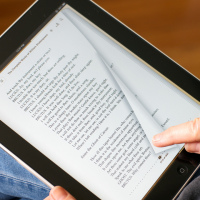
10 Best-Selling eBooks for Gifts
In 2012, eBook revenue growth was responsible for 23 percent of publisher net revenues, according to the Association of American Publishers in a report published on the Digital Book World site April of this year. Three out of 10 adults read an eBook last year, based on a report Pew Research Internet Project published January of this year. In addition, half of them own dedicated hand-held devices like a tablet or eReader, two devices widely used to read eBooks. Some readers also use smartphones to read eBooks.
In a similar vein, Statistica reported eBook sales revenue was expected to reach 8.69 billion in 2018. This projection is a marked improvement from the 2.31 billion recorded in 2011. eBook sales are expected to rise even more, as different eBook reading apps and eReaders like the Samsung NOOK hit the market. The trend also shows more are switching to eReaders from print, though print books still remain the dominant choice in reading format.
Given all these, buying eBooks for gifts sounds like an excellent idea. Key genres for eBook bestsellers include mystery/thrillers, science fiction books/fantasy and romance, so it’s a good bet your shopping would involve books in these genres.
Here’s our top ten list of recommended bestsellers you could give out as books for the coming holidays this year:
1. The Fault in Our Stars by John Green
Green’s YA book, about the romance of two cancer survivors, still tops the list of 2014’s bestsellers. If you’re in the mood for a tearjerker sans cheesiness, one with both heart and humor, this book is perfect.
2. Divergent Series by Veronica Roth
Want action, philosophy, romance, and adventure in a Dystopian setting? The Divergent trilogy is in the same vein as the Hunger games trilogy but with a completely different ending. (Clue: not a happy ending). Still, story and character-wise, this series—particularly the first two books—is a win.
3. Gone Girl: A Novel by Gillian Flynn
“What happened to Amy?” is the question at the core of this story. At their fifth anniversary, Nick’s wife—Amy—goes missing. From there, it’s a slow, irresistible ride to find out what happened and why. If you’re looking for a night-time thriller to put you to bed, don’t pick up this book. Otherwise, it’ll keep you wide-awake with a can’t-wait-till-i-get-to-the-last page fever and you’ll be wondering where the night has gone when you see the light creeping outside your window.
4. The Fixed Trilogy by Laurelin Paige
If you’re a fan of the Fifty Shades series, there’s a big chance you’ll fall in love with Alayna and Hudson as well. This steamy trilogy is on the New York Times and USA Today bestseller list.
5. The Husband’s Secret by Liane Moriarty
Cecilia finds a mysterious letter addressed to her. The opening lines read as: “To be opened only in the event of my death…” and so starts the mystery involving John Paul, Cecilia’s husband, and her struggle to either keep or reveal another person’s secret.
6. Love Illuminated by Daniel Jones
This is the compilation of the Modern Love column from the New York Times. Edited by Daniel Jones, these deeply personal, intimate, fun and touching essays not only say a lot about love, but about human relationships in general. Filled with different voices, places and histories, the book is great read for those who find themselves wondering about love, in all its complexities and complications.
7. The Beauty of a Husband by Anne Carson
At times poetry and novel, this is a beautiful and haunting story about a man who can’t be anything but unfaithful and the woman who loves him. The language is sensual and honest and the short passages on the page mimic the steps of a tango dance. An inventive and stirring read.
8. Written on the Body by Jeanette Winterson
This is a about the wonderful romance between Louise and her lover, whose gender is never fully revealed. Quotes from the book include “I love you is always a quotation,” in the sense that many have said the exact same words before we have. And yet, when we do say those words, we say them as though we are doing it for the first time. Tender, touching and lush, this remains as one of Winterson’s best works.
9. All the Light We Cannot See by Anthony Doerr
This is the story of a young German boy whose talent in engineering gets him sent to a military academy. Set in World war II in France and Germany, this is one of the best books you’ll ever read in 2014.
10. The Lumatere Chronicles by Melina Marchetta
Part-science fiction, part-fantasy, the three books in the Lumatere Chronicles combine romance, adventure, and the many ways families sacrifice and love. From insane princesses to adventures that rival the Lord of the Rings in its scope, this three-parter would leave you wanting to root for Isobel, Finnikin, Froi and Quintana, along with the rest of the well-fleshed out characters of the books.
These are just some of the best eBooks you could give as gifts to friends and family. Have fun reading these titles on your own—and adding most, if not all of them, to your personal list of favorites.
-

Shopping Online This Holiday Season? Stay Safe with These Tips
The holiday season is upon us, and for many people, that means one thing: Shopping. More people than ever before are expected to skip the malls this holiday season and shop online, using both computers and mobile devices, enjoying the convenience, selection, and competitive prices that online merchants offer.
Unfortunately, the increase in online shoppers also brings an increase in cybercriminals, who are more than eager to get their piece of the holiday shopping pie. Because there is such an increased risk for identity theft and other crime, it’s important for anyone who plans to shop online to take certain security precautions.
1. Update Internet Security Protections
Keeping your computer and your Internet security tools as up-to-date as possible is the best way to protect yourself against hackers and thieves. If it’s been a while since you updated your operating system, take the time to do it now; hackers often exploit vulnerabilities in operating systems to spread malware, and keeping the software up-to-date is the most effective way to avoid those exploits. Make sure that your antivirus software is up-to-date as well (and set to automatically update on an ongoing basis) and protects your social media and email accounts from phishing attacks.
2. Use Credit Cards, Not Debit
Debit cards are convenient, but they are also dangerous when shopping online. If your information is exposed, a thief can wipe out your account in a matter of minutes, and getting your money back isn’t always fast – or even a given. It can often take banks up to 90 days to investigate and reverse charges on a debit card, which leaves you out of cash in the meantime. Credit cards, on the other hand, limit your liability on fraudulent purchases to $50, and often, you don’t even have to pay that.
Even when you use a credit card, keep track of your accounts and check them regularly. Criminals often “test” cards by making a series of small transactions, usually under $20 each, before using the card for a larger purchase. Report any suspicious transaction, no matter the amount, to keep your accounts safe.
3. Use Only Official Shopping Apps When Going Mobile
Shopping via mobile device is expected to increase significantly this year — as much as a quarter of all online sales are predicted to come via mobile — meaning that hackers are going to be looking for ways to access mobile transactions and steal information. When using your smartphone or tablet to shop, stick to official shopping apps for your favorite stores; you can tell if the apps are legitimate by checking out the developer information and only downloading apps from the official app store for your device. Don’t download apps that arrive in unsolicited emails or text messages — chances are they are spoofed, and will lead to the theft of your financial data.
4. Follow Password Protocols
A strong password is one of the best ways you can keep your data safe, so take care to follow the protocols for maintaining strong passwords. Never use your banking or credit card passwords anywhere else, and use two-factor authentication whenever possible.
5. Use Secure Networks
Free Wi-Fi can help you avoid using up your data, but most free networks aren’t secure — meaning that anything that you share can be intercepted and seen by hackers.
One common scheme is for criminals to set up Wi-Fi networks with names that resemble the legitimate restaurant, shopping mall, or airport network, tricking unsuspecting users into connecting. They then spy on the network to gather any information they can, including passwords, credit card information, and emails.
If you will be doing anything that requires sending sensitive information, avoid using the free Wi-Fi and connect via secure network instead.
6. Avoid Popups and Unsolicited Emails
Finally, while you shop for holiday gifts, be on the lookout for unsolicited offers that appear too good to be true. Criminals inject websites with code to create popup advertisements that appear legitimate, but are designed to trick customers into sharing their credit card numbers. Unsolicited text messages and emails offering special deals — or prompting you to log in to your accounts — should also be ignored and deleted. Again, only shop via official websites and apps, and only when the site is secure.
Online shopping undoubtedly makes the holiday season easier, but it can also be dangerous to your identity and your finances. By making smart choices and making security a priority, you can keep the holiday season a happy one — and not one marred by the stress of identity theft.