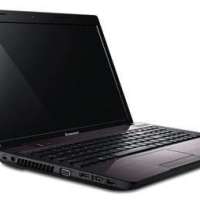
In the current deluge of ultrabooks, tablet computers, and hybrid gadgets the emergence of a good solid laptop almost goes unnoticed. If you’re talking about a Lenovo product, however, it’s a different matter. The famous technology company’s equally renowned Ideapad notebook breed has a new edition – the Lenovo Ideapad Z575. And by all accounts the Z575 is slated to become another winner what with its fetching design and all-round performance.
Search results for: “label/Networking”
-
Spicing Up Your Social Media
Social Media has become a tried and tested method of promotion for your website and with every algorithm tweak and change that Google and the other search engines are doing social media is becoming more and more important. Google indexes links that come from Twitter and other social media sites (though it is still in talks with Facebook over its user content) and as links are phased out and smart semantic web associations between terms (generally referred to as co-ocurrence) become the norm these social media mentions are only going to become more important. Facebook’s latest announcement, Graph Search just made social networking even more important than ever.
Up until recently you could rely on backlinks to get your site higher in the SERP classification as any Search Agency professional would tell you. But if people do not search for your site through conventional search engines but rather stay within their social network and try to get a customised result from within their social network the whole point of Search Engine Optimisation is moot. Of course not everybody will use Facebook’s Graph feature and, indeed, not everybody has Facebook so there will still be a great market for SEO, even if links will likely keep dwindling in importance.
-

Facebook Screams to Zero-Day Java Exploit: Is Your Account Compromised?
Facebook recently discovered a zero-day java attack roaming the internet which it happened to be one of the targets. According to Facebook officials, this attack was discovered on victimized computers belonging to Facebook engineers. The zero-day java attack was designed to download and installed a collection of unseen malware programs in victimized computers but was deciphered when a suspicious domain was found in Facebook’s Domain Name Server request log.
The perpetrators of this attack injected the code on the HTML of popular Mobile Developer web forum which tends to victimize any visitor that has java enabled on their browser.
-

Effective SEO Tips for New Sites to Get To the Top
Thousands of new websites are born or registered everyday. The sites that are optimized with latest SEO standards obviously seem to do better than the ones that are not. As a matter of fact, there is no point in starting a website if you are not planning to do SEO on that. It will be buried way back in the search results pages and no one will ever get to know about your business.
Plenty of work has to be done when a new business site is created, and some of them are quite complex too. Remember that SEO is always going to be an ongoing process, and it picks up momentum in the long run.
SEO is all about targeting the relevant audiences to your website, and keeping them interested with continuous engagements. Hence, do not optimize your sites solely for the search engines. You will have to mainly focus on your potential customers. Even the search engines give first priority to their users. In simple words, you will need to please your clients, and Google has no option but to offer you with good page rankings.
With the launch of a new site, you could simultaneously setup a few things for long term success. For this you can prepare an SEO checklist to prioritize work for optimizing new sites.
-

5 Top Health Apps
With the first quarter of 2013 nearly over, those healthy New Year resolutions that seemed so achievable in January may have fallen by the wayside as bad habits start to creep back into our routine. In order to help you get back on track with your goals, we have put together our top five health apps for you to download on your smart phone or tablet. Whatever your aspiration, there is sure to be one that suits you!
-
Digital Transformation, Equinix London LD4.2 Data Centers, and COVID-19
Covid-19, also referred to as CoronaVirus, has impacted our lives in multiple ways. While most of these impacts of the virus are negative, there is one way the virus has impacted us positively: Digital transformation. Covid-19 has made it possible for us to go as digital as possible.
The shift to remote work
As there is a global lockdown worldwide, employers have now shifted to remote work for their workers instead of calling them to the office. Employees all over the world are now working from home because of the risks that the virus concedes.
Other than the employees shifting to remote work, the demand for digital work is at an all-time high. The unemployed are trying to secure a job in the digital industry, whether in marketing, IT, software, etc.
This is true for one major reason; everyone now knows that ‘digital is the future.’ The competition in freelancing activities is much higher than before. Everyone is attempting to become a freelancer because what better to do than sit at home and earn money by securing an online job. Companies will have to develop an effective strategy to enable their employees to work remotely from their homes.
Significant increase in the demand for technology services
As the world turns digital, a significant increase in the demand for technology services can be observed. Companies are now hiring professionals to build their customized software for effective communication within the company.
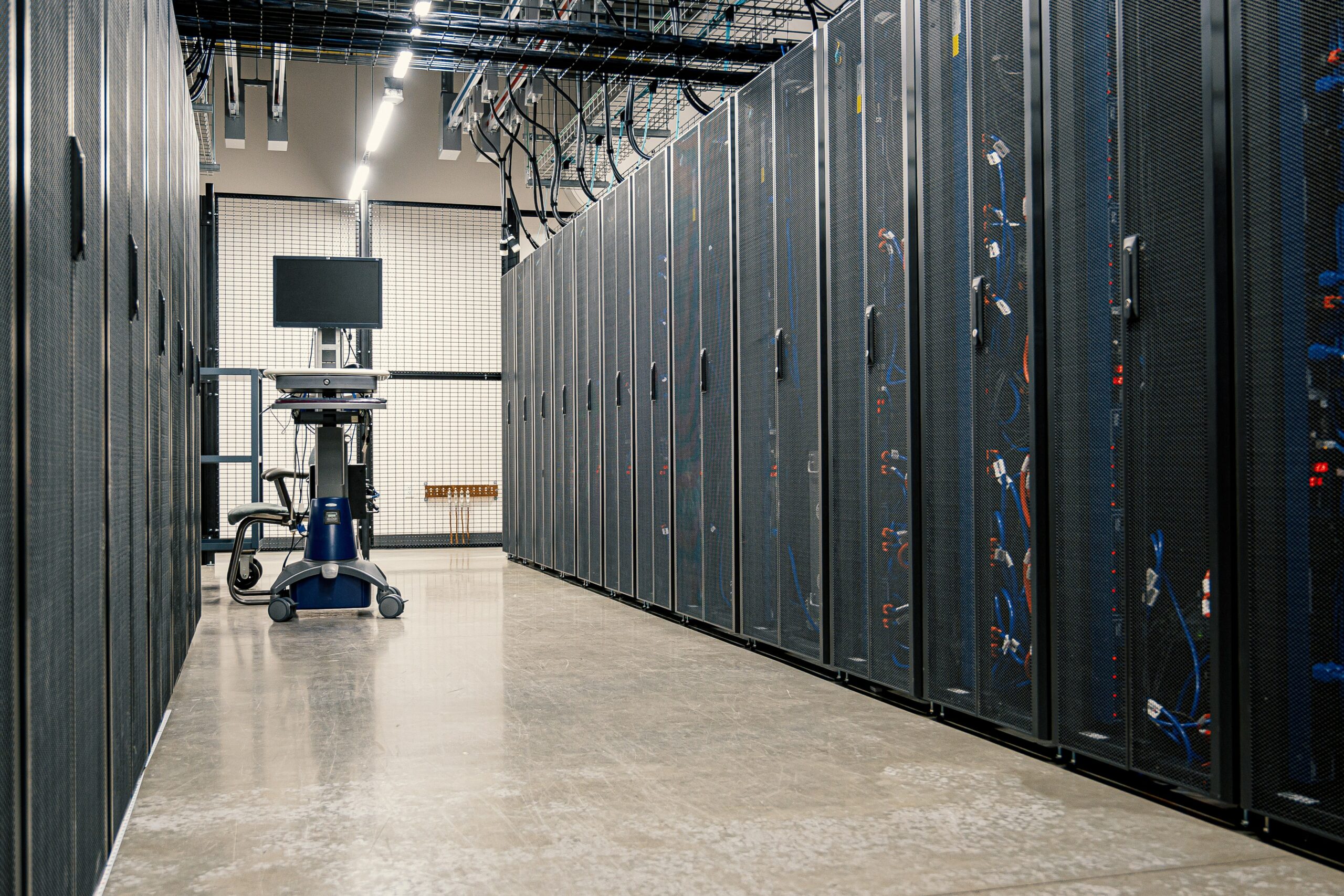
Moreover, companies are trying to maintain data centers for better decisions in the future. Equinix London LD4.2 is one such example of data centers in London that can help with an accurate categorization of your data so that you can make heuristics-based decisions instantly. Larger companies now have to take the aid of agencies that provide technology services for multiple services like:
- Data Centers, Database Designs, and Data Categorization
- Software Development, Integration, and Maintenance
- Hardware
- Networking Integration, Management, and Maintenance
- Information Security (IS)
- IT Management Consultants
- Mobile Services
- Web Applications
While most people are losing money in this badly affected economy, IT firms are doing the opposite. They are earning as much money as they can as the world goes digital. That is how Covid-19 paved the way for IT startup solutions.
IT startup solutions
Having a successful IT startup is rare because of high competition and low demand. Most of the IT startups fail in their first year. However, due to COVID-19, technology services are high in demand. That means that the IT startups will probably find clients if they market themselves the right way.
Finding clients early in the business is excellent and means an early success for the business. If the business operates the right way, it will likely succeed in the coming years, and all of this is possible because of Covid-19 and the digital transformation. Hence, this is what’s meant by IT startup solutions.
Is Digital transformation just temporary?
It doesn’t seem like a temporary transformation. It is now a part of our lives, and it is here to stay. Yes, people will eventually start working from their offices again. But does that mean that the demand for remote jobs is going to decrease? Does that mean the demand for technology services will decrease? That is very unlikely. However, there isn’t a definite answer to that question. Only time will tell what the future holds for us.
-
OneLogin
There’s a serious problem that’s growing with the shifting trends of business today, and it’s an elephant in every room that every bottom-rung entrepreneur and CEO alike wants to ignore.
The problem is that businesses are becoming increasingly reliant upon third-party services to carry out their work and secure quality assurance metrics.
These metrics must be met for a host of revenue- and legal-driven reasons that can lead to insurance cuts, lost business and other serious problems down the road, so of course it’s important for every manufacturer to enlist vendors for every task that the manufacturer itself isn’t equipped to handle on its own.
This is why people hear about the network of seemingly invisible companies that are woven into a single operation.
In fact, the increasing complexity and pace of society today has burgeoned to such a degree that nearly half of the manufacturers out there have left their databases severely exposed to the laptops, tablets or smartphones that their third-party representatives are using to capture and report information with.
The ubiquity of smartphones has made it ever more possible for black-hat code manipulators to shoehorn themselves through the many uneven edges in the out-facing facade of a manufacturer’s metaphorical cyber-garrison.
Sobering dtatistics
There are several ways that an unwanted presence can find its way into a manufacturer’s database. Consider the fact that most field vendors create the following environment for the back-end IT managers to contend with:
- Different operating systems.
- Different versions of the same operating systems.
- Different applications installed on each of those operating systems that potentially have their own backdoors, permissions and loopholes.
- Different browsers to interact with the web.
- Different connection types, protocols and providers.
- Different hardware with potentially unique exploits in each combination.
This conglomeration creates a nearly infinite number of variables that a hacker can leverage to gain entry to personal information; it’s just a matter of finding the most convenient one and kicking down whichever doors aren’t secured properly with multi-factor authentication.
Some exploits are discovered early by the wrong people and are never revealed until an opportune moment arises. This leads the discussion to some scary numbers:
- Ten percent of the manufacturers on the market are exchanging data with 200 or more vendors.
- Another 33 percent use between 25 and 200 vendors.
- Of all the manufacturers that are impacted by security breaches, 90 percent are left with at least $190,000 in damages.
- The other 10 percent of that figure experience losses at a minimum of $750,000 per breach.
The problem this creates
No, this isn’t an attempt at calling out how people handle their businesses; in fact, that has very little to do with this.
The reality is, a new age of computing technology, networking and security concerns means new MFA measures must be adapted to circumvent the ever-growing threat of privacy breaches that could expose not only client data but also result in massive damages to company operations on top.
Many of these attacks occur from individuals who operate on the dark web to exchange the fruits of identity theft for sums of bitcoin to those who can impersonate clients, and the last charge that any entrepreneur wants to be saddled with in a courtroom is facilitating the ruination of people who trusted their services.
How to handle it
Companies are handling this in a number of roundabout ways with, well, more third-party companies: deep web scanners, security checkpoints, misplaced multi-factor authentication protocols, over-tightened restrictions and a number of other underwhelming measures that don’t actually prevent malicious code from making it in the front gate and to the hard drives themselves.
No, this is where the manufacturer needs to trust in OneLogin, a service that provides a complete barrier to set the business servers apart from the vendors who report their work and log into the system.
OneLogin works by channeling all incoming connections through their own services before allowing them to pass to the manufacturer’s servers, acting as a mediator.
This funnels every connection from every app, operating system and hardware configuration into a single connection that’s secured by MFA protects vendors, businesses and clients alike.
As the world moves forward, services provided by companies like OneLogin are becoming more important, especially for larger businesses.
-

Enterprise Technology Continues to Grow With These 9 Trends for 2017
According to Forbes magazine, businesses can expect several enterprise technology trends in 2017, and some of them may or may not surprise you.
It’s no surprise that mobile technology continues to progress; people are addicted to their smartphones and notepads. What might surprise you, however, is how much this advancement will help you market your business and sell your goods.
Here are nine trends that will get you even more excited about enterprise technology for business.
1. More Businesses Will Jump on the Cloud
Just as many homeowners jumped onto Voice over IP (VoIP) technology to save money when Donald Burns founded magicJack, more businesses are sticking their heads in the clouds. Cloud migration is predicted to be huge in 2017.
Companies who adopt cloud-first strategies save money on equipment and hosting costs and increase their data storage capacity. Cloud computing also enhances collaboration which increases productivity and streamlines operations, reports Forbes.
2. Enhanced Cybersecurity
There’s a catchphrase in enterprise technology and that is the “internet of things”, or IoT. As more business is conducted, marketed, and branded on the internet, security becomes a more crucial piece of enterprise technology.
As discussed by Forbes, “Designers must consider IT security early in the development of applications, solutions, and enterprise architectures This means IT professionals will design security measures that are based on behavior analytics and layered across multiple enterprises.
3. Marketing and Data Centers Will Be Automated
Although many people fear losing their jobs to automation, many consider it to be an, “investment in the future,” says Forbes. Automation will create new jobs in different business sectors, and it will streamline marketing and data centers.
Open source automation tools are already in demand in data centers throughout the world, and business owners can expect to see more data centers adopting automation in 2017. Marketing centers are also predicted to jump on the automation bandwagon.
4. Rise of the Machines
Okay, not literally terminators, but apps are expected to become even more intelligent in 2017. If you use Cortana or Siri, you already know what a virtual personal assistant is. Expect an increase in intelligent apps designed to streamline the workplace and its processes.
In fact, Forbes predicts that intelligent apps will expand beyond virtual assistants, so you can expect smarter software that has artificial intelligence built into it, including your office and anti-virus applications.
5. Humanizing Data
You may have heard of humanized data but not paid attention to what it was. As evidenced by the Edward Snowden/NSA fallout, there is an unbelievable amount of data out there on every human being throughout the world. You cannot leverage all it, but you can leverage most of it, and you should.
Using what you know about the humans who solicit your business and your demographic, you can better meet their needs and market and sell to them.
6. Hyperconvergence Systems
What if you could have your computing, networking, storage, and virtualization through one vendor? This is called hyper-convergence, and Forbes is predicting 2017 to be its year.
There are a few kinks to work out of this enterprise technology, such as expense and speed, but hyper-convergence is becoming more and more mainstream. Many businesses find that having everything in one place makes resource acquisition easier.
7. Increased Mobility
It’s no surprise that mobility continues to reign supreme in enterprise technology. One exciting prediction for 2017 is ROBO, or Remote Office/Branch Office.
More companies are expected to take advantage of doing business remotely, and, as such, the tools used in mobile technology will increase. This challenges information technology experts to enhance business mobility on all levels, including business interface on mobile devices.
8. Stay in the Fog
“Fog computing” is an extension of cloud computing, and, according to Forbes, it “extend[s] cloud computing and cloud services to the edge of the network What does this mean, exactly? It means it brings your cloud storage power closer to you.
Fog computing reduces your data transport, which makes storing your data offsite more efficient. Fog computing will also be used to improved the technology behind smart buildings, cities, and grids.
9. XaaS Anything as a Service
What do trends one through eight tell you? They tell you that the biggest trend in enterprise technology for 2017 is “anything as a service Information technology experts like to call this XaaS, and it means there will be significant advancements in how businesses utilize cloud, data, hardware, and all other technology as a service.
Putting these tools to work for your business will increase your capabilities, which is why there are so many enterprise technology trends predicted for 2017.
Enterprise technology is changing the face of business. It is not only changing how businesses interact with each other and their customers, it is also changing how businesses operate.
With ever-expanding technology solutions that streamline everything, including automation, data storage, and virtual assistance, it’s a sure bet that more companies will look into what enterprise technologies can do for them and jump on board.